
THE STORIES THAT BIND US—and how we let them go
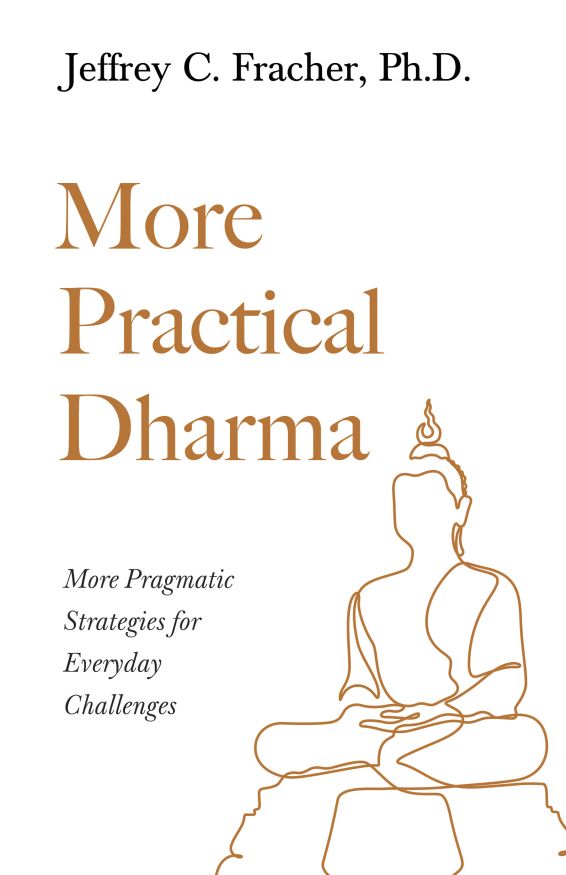
We get to be a part of many wonderful people’s book journeys—whether through book coaching, editing, publishing—or all of the above, which is how more practical dharma, a recent collaboration with dr. jeff fracher, came to exist.
This week, we’re so excited to share a chapter from our client Dr. Jeffrey Fracher’s recently published second nonfiction book, More Practical Dharma: Pragmatic Strategies for Everyday Challenges. This post is an excerpted chapter, originally titled “Are We Bound By Our Stories?.”
About the Author
Dr. Jeffrey C. Fracher, Ph.D. is a retired Clinical Psychologist, and was in practice as a clinical psychologist for 44 years in New Jersey and Virginia before her retired. He has practiced Buddhism since 1992 when he took the lay precepts, committing to the Buddhist path, in the Sangha of the late Thich Nhat Hanh.
In 2013 he completed a 2-year Buddhist teacher training program at the Meditation Teachers Training Institute in Washington, D.C. He was a senior teacher at the Insight Meditation Community of Charlottesville for 10 years, where he was also president of the IMCC Board of Directors, before his retirement in early 2022.
In 2022, he founded Serenity Sangha of Charlottesville, a far-reaching virtual community of Buddhist practitioners which emphasizes Practical Dharma, the synthesis of modern psychology and ancient Buddhist wisdom.
Jeff, a native Virginian, lives in Charlottesville, VA, with his wife of 53 years, Kay, and his two beloved rescued Golden Retrievers, Kaiya and Khema. He has two adult sons, Eli and Luke. In addition to leading Serenity Sangha, he is a Clinical Assistant Professor in the Clinical Psychology Ph.D. program at the University of Virginia. He is a volunteer bereavement group facilitator at the Hospice of the Piedmont. He also serves on the City of Charlottesville Police Civilian Oversight Board and is the founder and Chair of the Charlottesville Parks Foundation.
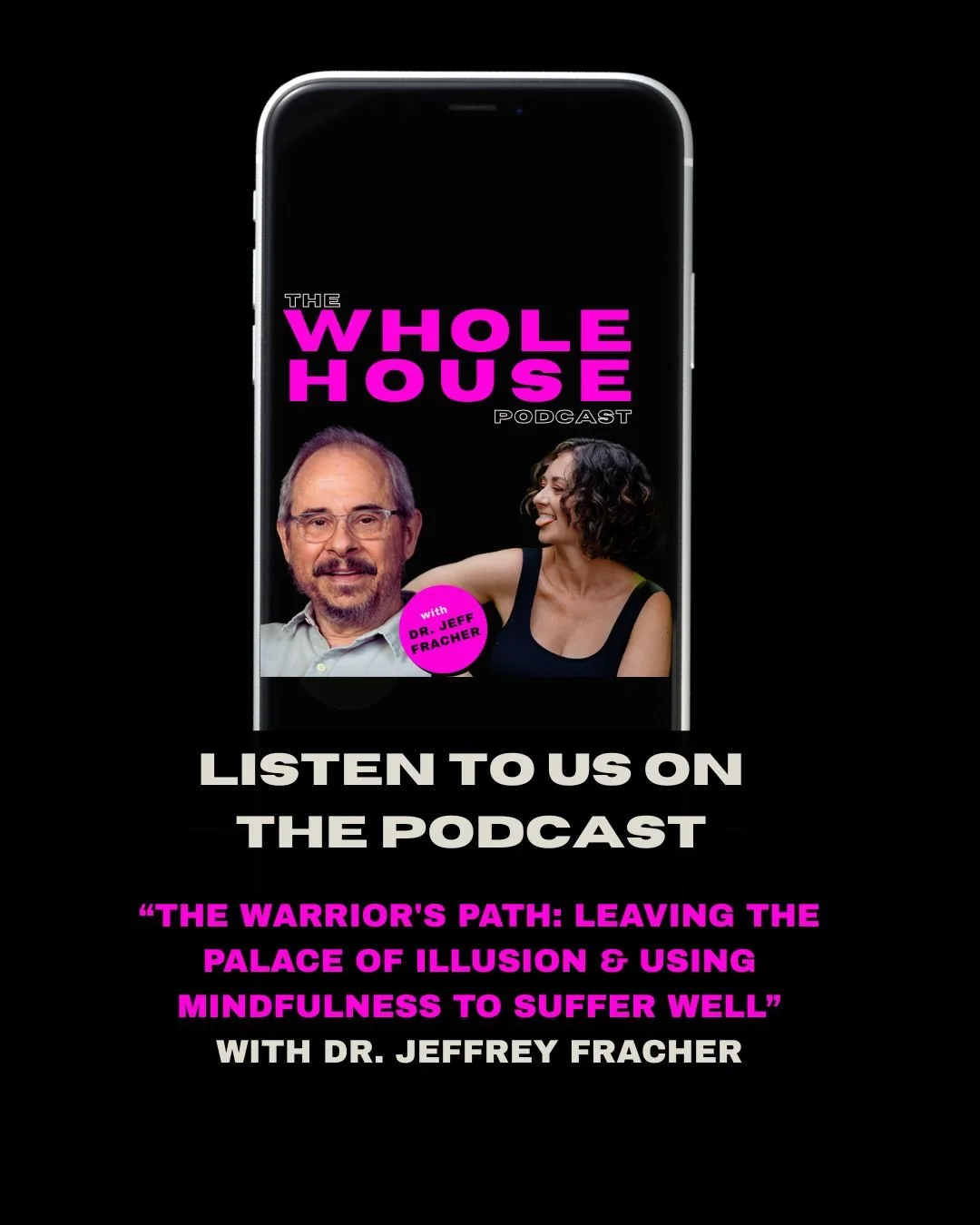
READ the CHAPTER >>>
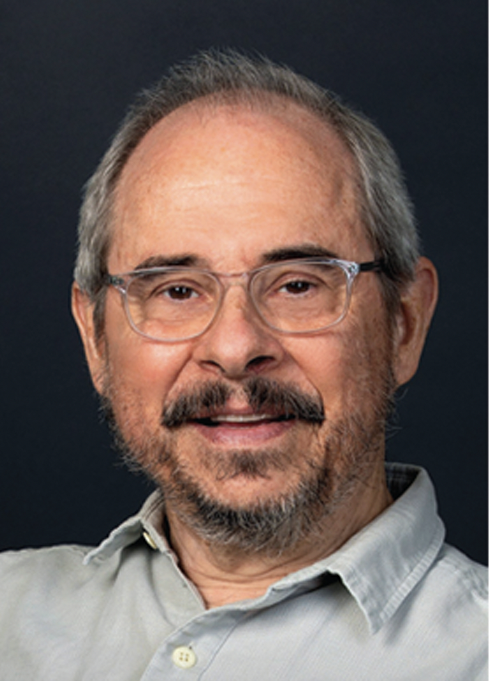
Jeff is the author of Practical Dharma (2022) and More Practical Dharma (2025)
“The most dangerous stories we make up are the narratives that diminish our inherent worthiness.”
—Brené Brown, Ph.D.
When we see things clearly—without distortion, without delusion—we are focused on an important means of reducing our suffering. Yet too often the stories we tell ourselves about ourselves and the world in which we live are told by the fickle and grasping ego: largely focused on our (perceived) shortcomings, weaknesses, and least desirable traits, or grandiosely exaggerating our (perceived) admirable traits to offset our feelings of inadequacy.
The stories we tell about ourselves tend to be narrow and limiting, definitions of ourselves based on past actions, relationships, successes, and failures. They are stories we internalize from our parents, our siblings, and our peers when we are children, as well as stories we infer after trauma. We end up believing ourselves to be a particular kind of person: “I'm a good person,” “I'm a bad person,” “I'm a success,” “I'm a failure,” “I'm worthy,” “I'm not worthy of love.”
The Buddhist perspective sees our stories and our sense of self as intricately connected chains that bind us to our suffering. For example, we recall past events and interpret them through subjective lenses, framing them as “my childhood,” “my achievements,” or “my traumas,” which we then make define who we are in the present moment (“I’m a survivor,” “I’m damaged goods,” “I’m a winner”). Similarly, we project into the future, constructing hopes, fears, and expectations based on these stories that shape our sense of self (“I won’t be able to accomplish anything like that after what I’ve experienced,” or “I simply cannot fail or it will confirm that I truly am a failure”). Our stories become the framework through which we interpret the world, creating a continuous cycle of attachment, aversion, and ignorance. In doing so, we fail to see both ourselves and reality as we truly are: transient, interconnected, and devoid of a fixed self.
Through wisdom and practice, we have the potential to free ourselves from these limiting narratives to which we cling.
One of the central tenets in Buddhism, one of the Three Characteristics of Existence, is non-self (the other two are impermanence and suffering.) The Buddha taught that what we conventionally refer to as the self is, in fact, a constantly changing and flowing collection of physical and mental phenomena with no fixed, permanent, or independent existence.
But if our “Self” is not fixed, then how can we chronically find ourselves to be “not good enough?” I find this teaching on non-self incredibly liberating, because it expresses how our sense of a solid, separate self is just another story we tell ourselves, and to which we become attached and cling to. Therefore, any assessment or judgement we may have of ourselves, even the ones that we hear constantly playing in our minds—that we are “not good enough" or “too [fill in the blank]” or “not [fill in the blank] enough”—fall squarely into the same category as any other projection or illusion: that of an untrue story.
Buddhism asserts that this Self—this narrative or “self-story”—is fundamentally a delusion—a misperception of reality that leads to unnecessary suffering. These fixed narratives blind us to the more open, spacious, and ever-changing reality of who—or perhaps what—we truly are, because we are not the same person from moment to moment! There is a core there, yes, but how much do our stories trap us into a narrative that actually need not have any relevance to our life? By clinging to our belief in a fixed self, we create an artificial duality between self and other—a “you” and an “I” that need to be protected and which are always in conflict or competition. This is again the ego at work.
The ego is not a bad thing. We could not live without it. We just have to manage it skillfully.
Because when we become attached to stories we believe to be true, we then pursue the experiences—with what is known as confirmation bias—that affirm and enhance this self-story. In the same process, we push away experiences that contradict or threaten our self-story, even when they have the potential to drastically improve our lives. For instance, we might have a story about ourselves, adopted from a single experience, that we are “bad with money.” When we make this a “fact” in our self-story, our brain continues to seek evidence to support it, and as a result we will encounter more experiences that confirm this story, even if we want badly for the opposite to be true and we wish we were “good with money.” This attachment to the story of our self creates the reality we believe in, which is often the one we are most afraid of, and in this way is at the very root of our suffering, because it makes us the prisoners of our self-story.
This Buddhist path is one of waking up from those stories.
Waking up from the dream and the delusion of these false narratives: seeing through the illusion of self itself. Through our practice, we learn to observe the stories as they arise without getting caught in them, without getting hooked, without believing in—and, most importantly, without identifying with—them.
We do not let our stories define our understanding of, or our relationship with “me.” We do not grasp them into a fixed story that says “This is who I am and therefore this is all I’m capable of.” How limiting! Rather, we see them for their constructed nature: How they are conditioned by countless factors in the course of our lives—forces that are most often outside our control and, more importantly, outside of our awareness until we are able to witness them by coming to the practice—but do not need to hold any further bearing on our present or our future at all.
With the tools of our practice, we gradually disidentify with these narratives and touch into a deeper dimension of ourselves. We become the observer of our experience rather than being inextricably entwined with the experience. As we let go of these limiting self-stories, we open to greater wisdom and compassion. We see that all beings are subject to these same forces of conditioning—that everyone gets caught up in their own fictional narratives that are telling them, inaccurately, “who they are.” Recognizing this fact, that we are all doing this on some level, is integral to our practice of compassion, because it helps us see that everybody is struggling under the oppressive weight of their own self-stories, and we become less judgmental.
As we loosen the grip of our stories, we tap into a fundamental freedom: the freedom of a mind with the capacity to be open, present, and responsive to life as it actually unfolds—unconfined by the constraints of our limiting stories. We cease to be prisoners of narratives that have no more substance than any other fleeting thought, emotion, or construction of the mind.
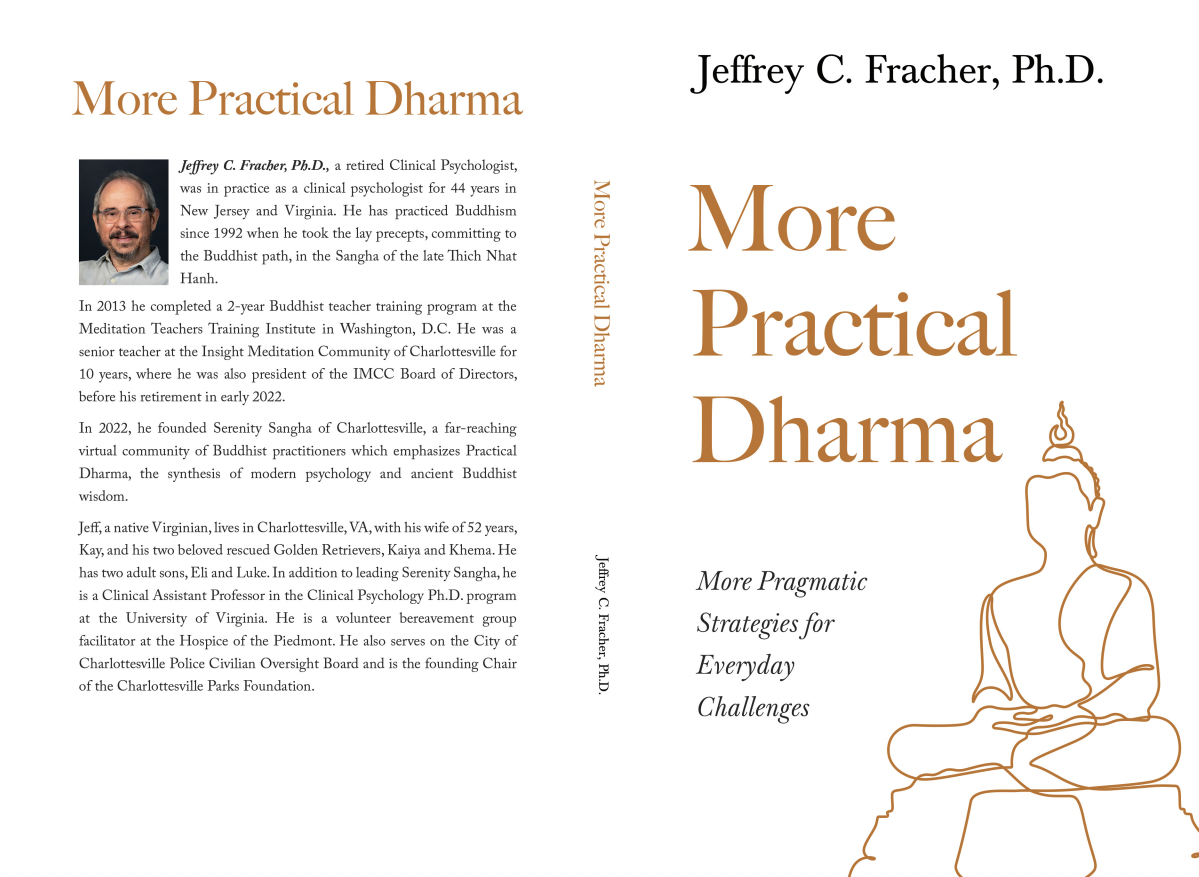
Buy your copy of More Practical Dharma here!
We are bound by our stories only to the extent that we believe them.
The path of awakening in Buddhism is one of seeing through the stories we carry about ourselves and the world around us—first by recognizing them, then by letting them go—so that we can align ourselves with a deeper reality of interconnectedness within the landscape of constant change. In this way, we taste freedom. That's the promise that the Buddha offered: Let go of the stories and taste freedom.
Reflection Questions:
1. How do the narratives you tell yourself or others about yourself shape the ways you experience and interact with the world?
2. In what ways can the Buddhist concept of non-self help you to reframe old feelings of inadequacy or fixed identity?
3. What practices can you incorporate into your life to observe and release the limiting stories you hold about yourself?